Every company has a Dana
The most valuable, least protected thing you own is the stuff nobody wrote down. Here's how to coax it out of your best person's head without turning it into a writing project.

Every company has a Dana.
You know... the one who knows how it actually works. Not the version on the org chart, the real one, the secret operating system nobody ever printed a manual for. She knows the workaround that keeps the Tuesday report from flying apart. The client who turns into a thundercloud if he isn't CC'd by noon. That one button you must never press before month-end close... she knows it the way you know not to grab a hot skillet: wordlessly, in her bones, forever. Ask anyone in the building how something gets done and you'll get the same two-word incantation: "Ask Dana."
Dana is an enigma. Dana is also a single point of failure with a pulse, and everyone is perfectly relaxed about that right up until the morning she isn't at her desk.
The most expensive habit in your company
Dana takes a week off and the office reverts to folk medicine. She gets promoted and her old job quietly goes feral, because the knowledge to run it wandered upstairs with her. She resigns on the friendliest possible terms and you spend the next three months texting her questions she'd have happily answered on day one, if only day one had known to ask. Nobody wrote any of it down. Nobody ever writes it down. It lives in her head, in that little private cosmos behind her eyes, unbacked-up and uninsured.

"Just write it down" is where it goes to die
I'm going to be brief, because at this point you're either saying, "not me" or "just get to the point."
Writing it down doesn't work. I don't have to tell you why, you just know it (hot skillet, anyone?).
The trouble isn't that Dana hoards what she knows. The problem is that turning doing into writing is slow, faintly soul-crushing, and never urgent, so it becomes the thing that can always wait until next week.
Talk it through once
I built mlti to skip the writing entirely.
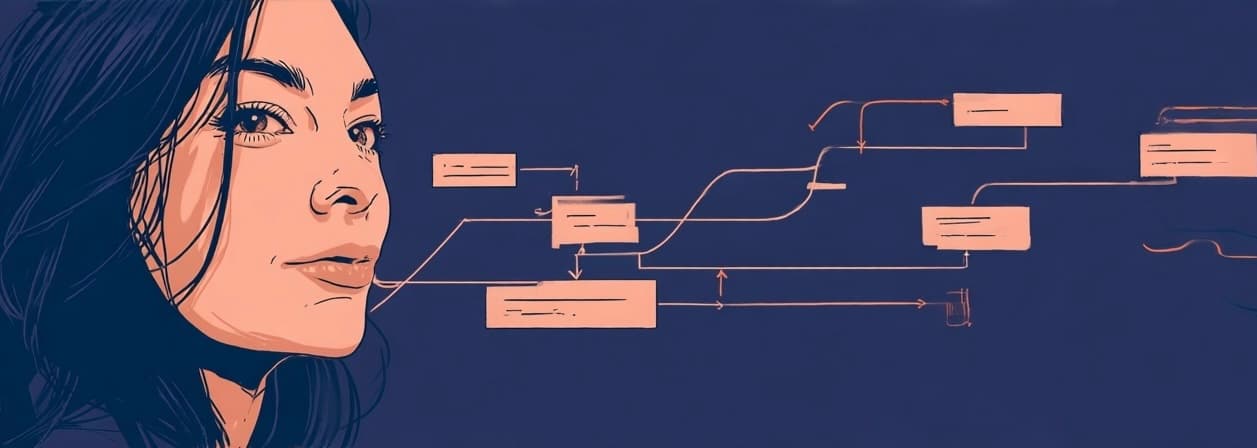
Instead of asking Dana to write, you ask her to talk. A short, guided conversation where she walks through how the work really gets done, narrating it the way she would to the new kid leaning over her shoulder. mlti listens, follows along, and quietly turns the whole beautiful ramble into a clean, structured runbook. She reads it over, fixes the one thing it got sideways, signs off, and now the whole team has it.
No blank page. No writing project. She talks; mlti writes it down.
Happy endings
Notice what doesn't happen here. Nobody replaces Dana. Dana isn't flattened into a spreadsheet (ouch). Actually, Dana is free! She can take the actual vacation. Take the promotion. Take the leave. Wander off to raise goats on a mountain if the spirit moves her, and the work she built keeps humming along without holding her hostage.
Where to start
Find your Dana. You already know who it is (you thought of a name before you finished the first paragraph, didn't you?), so pick the one process that would hurt the most if she vanished for a month, and capture that first.
Then do it before you need it. Before the notice, before the leave, before busy season lands on the org like a piano dropped from orbit.